
Chinese AI in 2026: Best Models, Apps and Checked Prices
On this page
Short answer
Chinese AI in late 2026 means a handful of companies that compete head to head with OpenAI, Google and Anthropic: DeepSeek, Alibaba's Qwen, Moonshot's Kimi, Zhipu's GLM and MiniMax on the model side, plus Kling, Wan, Vidu and ByteDance's Seedance on the video side. The short answer for most readers: use DeepSeek when API cost matters most, Qwen Chat when you want a free all-rounder, Kimi for agent and long-document work, and Kling or Wan when you need a Chinese AI video generator with a free tier. Every price below was checked on the vendor's own page on 25 October 2026.
The gap with US labs has become small. Stanford's 2026 AI Index says "the U.S.-China AI model performance gap has effectively closed", with the top US model leading by just 2.7% as of March 2026. That is why the question is no longer "are Chinese models good enough?" but "which one fits my task, budget and data rules?"
Who is behind Chinese AI: the companies to know
When people search "ai china", they usually mean one of three groups.
Startups that build frontier models. DeepSeek is based in Hangzhou and Moonshot AI (maker of Kimi) is based in Beijing, according to Euronews (6 October 2026). The same report notes that rivals Zhipu and MiniMax listed in Hong Kong in January. Zhipu's GLM models appear on OpenRouter under the z-ai name.
Big tech platforms. Alibaba runs the Qwen model family and the Wan video models, and sells both to developers through Alibaba Cloud Model Studio. ByteDance runs Seed, the team behind Seedance (video) and Seedream (images), and sells them to developers through BytePlus ModelArk. Kuaishou, which calls itself "a leading content community and social platform in China and globally", owns Kling.
Specialists. Shengshu Technology, a Beijing company that built Vidu in partnership with Tsinghua University (TechNode), focuses only on video.
Here is the thing most "top 10 Chinese AI" lists skip: these companies sell in very different ways. Some give the consumer app away and earn from the API. Others sell credit packs for video. If you compare them on "which is smartest", you miss the part that decides your bill. For a wider view of the industry, see our overview of artificial intelligence companies.
Chinese AI chatbots: DeepSeek, Qwen Chat and Kimi
Three Chinese assistants matter for English-speaking users in 2026. They differ less in raw quality than in what they charge for.
DeepSeek
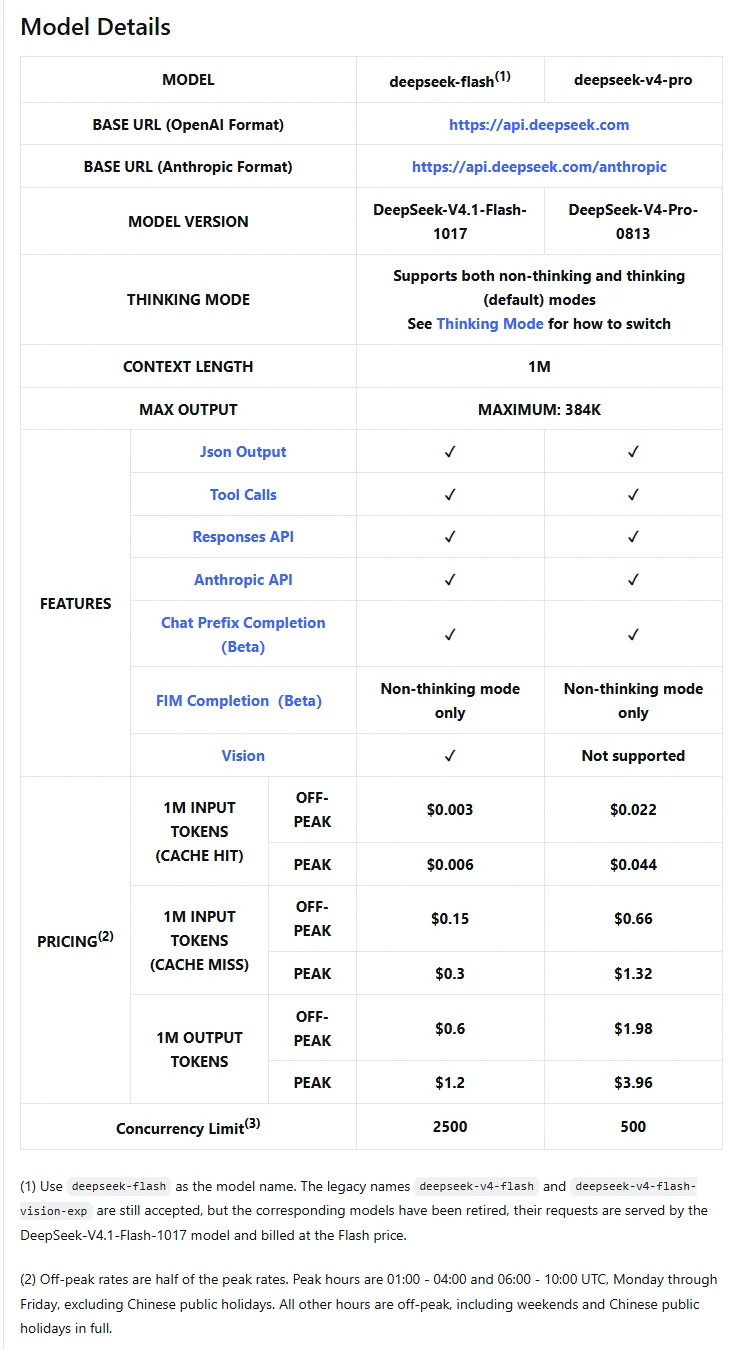
DeepSeek offers a web chat, a mobile app and a separate pay-per-token API. Its homepage says DeepSeek V4.1 Flash was updated to version V4.1-Flash-1017 and that the API now supports web search and fetch. Both API models (deepseek-flash and deepseek-v4-pro) have a 1M-token context window, according to the official pricing page.
Qwen Chat
Qwen Chat is Alibaba's assistant. The Qwen home page describes it as "free to use, open to all", with thinking mode, search, deep research, web dev, plus image and video generation in the same app. The Qwen API uses a format compatible with the OpenAI API, so switching an existing integration is mostly a matter of changing the base URL and key.
Kimi
Kimi from Moonshot AI leans into agents: documents, spreadsheets, slides, deep research and website deployment. Its pricing page lists a free Adagio tier ($0) and four paid tiers. Plus costs $15 per month billed annually ($180 per year), or $19 month to month. Up to 1M tokens of context is listed for Max and Ultra only.
| Assistant | Maker | Free option | Paid entry point (checked 25 Oct 2026) | Stand-out feature |
|---|---|---|---|---|
| DeepSeek | DeepSeek (Hangzhou) | Web chat and app | API from $0.3 per 1M input tokens (peak, cache miss) | Very low API prices, off-peak discount |
| Qwen Chat | Alibaba | "Free to use, open to all" | API, OpenAI-compatible format | Chat, image and video in one app |
| Kimi | Moonshot AI (Beijing) | Adagio, $0 | Plus, $15/month billed annually | Agents, deep research, slides |
Our opinion: Qwen Chat is the most underrated of the three for casual users, because the free app bundles chat, search, deep research and image and video generation in one place. DeepSeek wins on API math, not on app features. If you are weighing these against the usual suspects, our ChatGPT alternatives page and the ChatGPT vs Gemini comparison give the Western side of the picture.
Chinese AI API pricing: why developers switch
This is where Chinese AI makes its strongest case. Prices below come from official docs and the OpenRouter models API, read on 25 October 2026.
| Model | Access | Input per 1M tokens | Output per 1M tokens | Context |
|---|---|---|---|---|
| DeepSeek V4.1 Flash (deepseek-flash) | DeepSeek API, peak | $0.30 (cache miss) | $1.20 | 1M |
| DeepSeek V4 Pro | DeepSeek API, peak | $1.32 (cache miss) | $3.96 | 1M |
| Kimi K3.1 Pro | OpenRouter | $2.00 | $10.00 | about 1M |
| Qwen3.8 Max (0902) | OpenRouter | $2.00 | $6.00 | 1M |
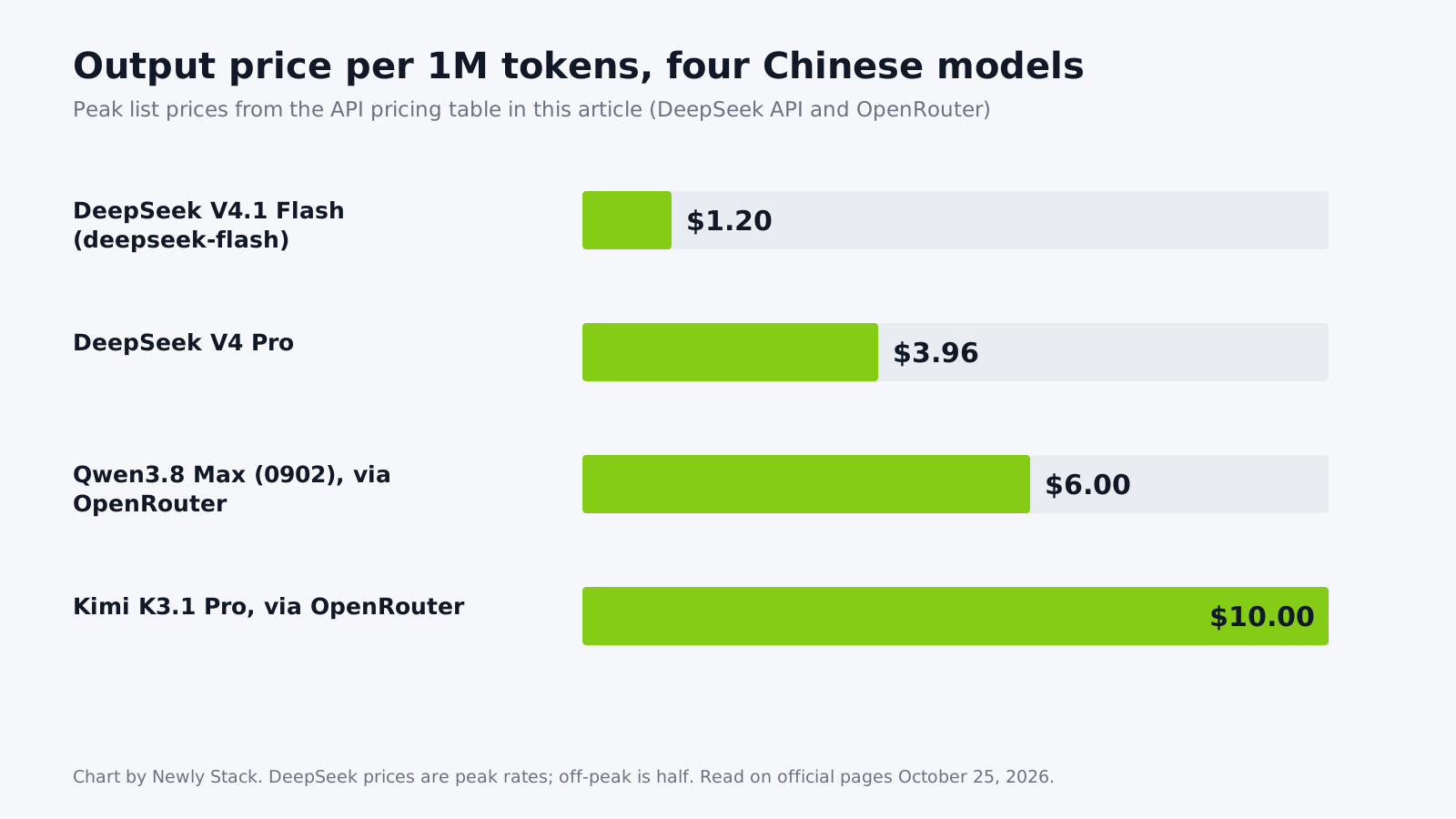
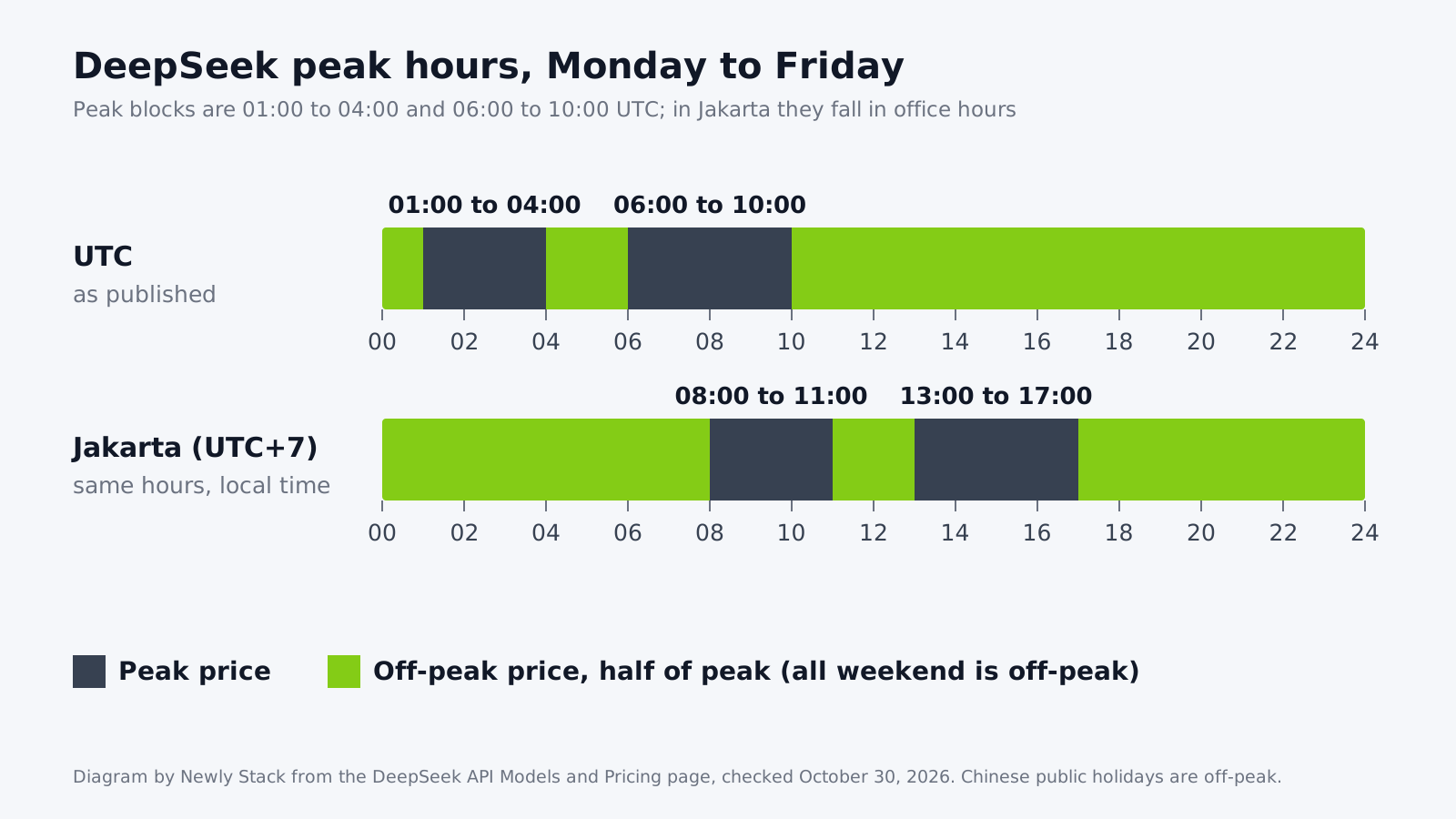
DeepSeek has a pricing detail that few articles explain. Off-peak rates are half of peak rates, and peak hours are 01:00 to 04:00 and 06:00 to 10:00 UTC, Monday to Friday, excluding Chinese public holidays. Weekends are fully off-peak. Convert that to your own time zone before you schedule batch jobs. In Jakarta (UTC+7), for example, peak falls at 08:00 to 11:00 and 13:00 to 17:00 on weekdays, which is exactly office hours. An overnight or weekend batch run costs half.
ByteDance also resells DeepSeek models on BytePlus ModelArk at the same headline rate ($0.30 input, $1.20 output at peak for deepseek-v4-1-flash), which helps if your company already has a BytePlus account. Chinese models also show up in cheap coding tools; see AI for coding for the editors that let you pick the model.
Chinese AI video and art generators: Kling, Wan, Vidu, Hailuo, Seedance and Seedream
If you searched "ai video generator chinese", this is the section you came for. In our view, video is where Chinese AI feels most competitive for everyday creators. Kling is also a real business, not a demo: Kuaishou's second-quarter 2026 results say Kling AI generated revenue of over RMB850 million in the quarter, more than 200% higher year over year, and the company says Kling "continued to lead the commercialization of AI video generation globally".
| Tool | Maker | Free plan | Cheapest paid plan (checked 25 Oct 2026) | Notable limit or feature |
|---|---|---|---|---|
| Kling | Kuaishou | Basic, $0 | Standard: $6.99 first month, then $8.8/month, 660 credits | Kling 4.0: native 30s generation, multiple keyframes |
| Wan | Alibaba | Free, daily check-in credits | Pro: US$5/month billed yearly ($10 monthly), 300 credits | Paid plans: 1080p and 10-30s videos |
| Vidu | Shengshu Technology | Free: Q4 at 540P, 4 credits/sec | Standard: $8.25/month billed yearly ($99), 800 credits | Paid plans: 3-16s videos, commercial use |
| Hailuo | MiniMax | Free: one-time trial credits, Hailuo models only | Standard: $8.40/month billed yearly ($100.80), 1,000 credits | MiniMax H3 via fal.ai from $0.05/sec at 480p |
| Seedance | ByteDance Seed | No standalone free app | BytePlus API: $10.70 per 1M tokens (480p and 720p, no video input) | Inside CapCut from $0.12/sec on Pro (first month) |
A few details matter more than the headline price.
Kling's membership page shows first-month promotional prices with a countdown. Standard is $6.99 for the first month and $8.8 per month after that. Budget for the renewal price, not the banner.
Wan's pricing page states that the subscription is for use on create.wan.video only, and "separate purchases are required for use with the API". If you plan to automate, a Wan web plan will not cover it.
Hailuo is MiniMax's consumer video app. Its plan page gives free users one-time trial credits for Hailuo models only, while Standard costs $8.40 per month billed yearly ($100.80) with 1,000 credits a month, and lists MiniMax H3 at 2K from $0.101 per second on that plan. The same model on fal.ai costs $0.05 per second at 480p and $0.13 per second at 2K, so a subscription only pays off if you generate often.
Seedance is mostly sold through other products. On fal.ai, Seedance 2.5 costs roughly $0.22 per second at 480p and about $1.16 per second at 1080p. Inside CapCut, Pro lists Seedance 2.5 "from $0.12/sec (first month)". For a 10-second 1080p clip, the gap between routes is large enough to change which one you pick.
Our take: for short social clips, a free tier from Kling, Wan or Vidu is enough to test whether the style fits your brand. Watermarks and resolution caps make free tiers a poor fit for client deliverables. Browse every option, Chinese and Western, in AI for video generation and AI for image to video.
Chinese AI art generators: Seedream and Qwen Image
On the image side, the two names to know are ByteDance's Seedream and Alibaba's Qwen Image. Both are model families rather than polished consumer apps. You mostly reach them through an API (BytePlus ModelArk or Alibaba Cloud Model Studio) or inside apps that license them. Qwen Chat also exposes image generation and editing to consumers for free, which makes it the easiest Chinese AI art generator to try without a card.
| Model | Where to buy | Price per output image (checked 25 Oct 2026) | Free option |
|---|---|---|---|
| Seedream 5.0 flash | BytePlus ModelArk | $0.018 | None listed |
| Seedream 5.0 pro | BytePlus ModelArk | $0.045 up to 1.5K, $0.09 above | None listed (first input image free) |
| qwen-image-3.0 | Alibaba Cloud Model Studio, international | $0.03 at 1K | 10 images (Singapore region, 90 days) |
| qwen-image-3.0-pro | Alibaba Cloud Model Studio, international | $0.04 at 1K, $0.075 at 2K | 10 images (Singapore region, 90 days) |
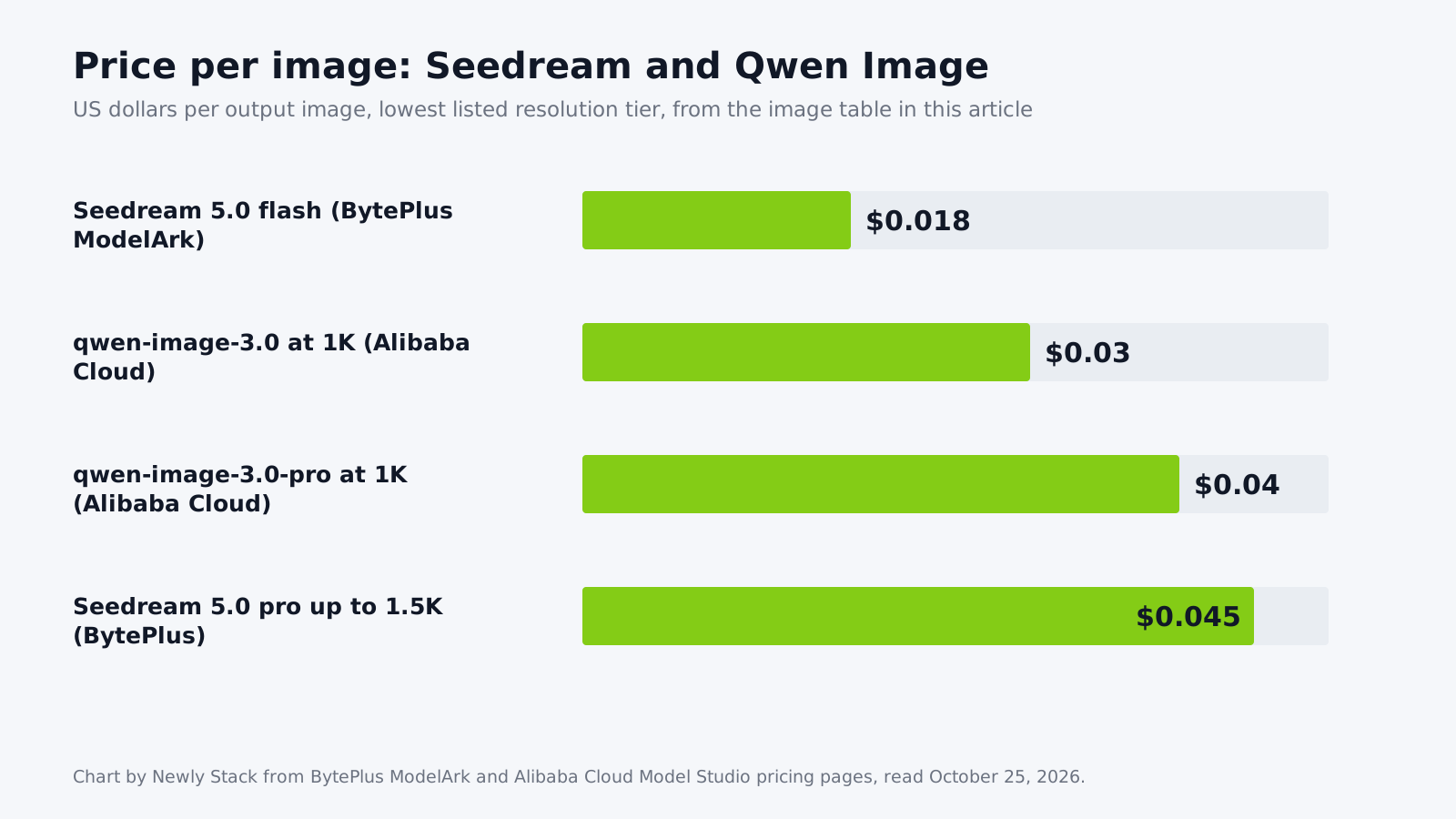
Per-image billing changes the math compared with credit-based video apps. A batch of 100 product mockups at 1K costs about $3 on qwen-image-3.0 or $1.80 on Seedream 5.0 flash, before any retries. The catch is that you need an API key, a billing account and some code or a tool that calls the API for you. Prices also vary by region and resolution, so check the vendor table before you quote a client. If you only want to make pictures without touching an API, our AI image generation directory lists consumer apps with free plans, and our free AI tools list filters to tools you can use at no cost.
Privacy, censorship and data residency: the honest trade-offs
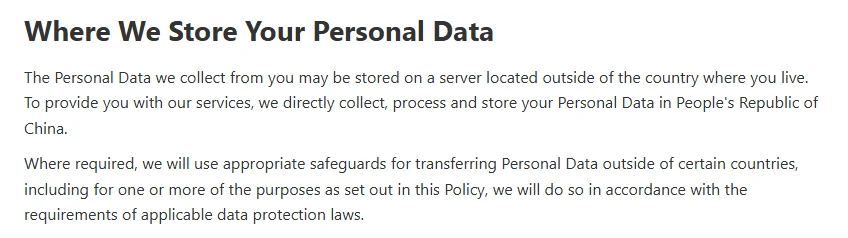
This is the part that should decide whether you use a Chinese AI tool at work. DeepSeek's privacy policy states: "we directly collect, process and store your Personal Data in People's Republic of China." That is a plain statement of data residency, and it matters for regulated industries, government work and client contracts with data clauses.
There are practical ways to separate the model from the data path:
- Use the model through a third-party host. OpenRouter and fal.ai list Chinese models, and US-hosted endpoints exist for some (the fal.ai Seedance endpoint is labeled "US-hosted"). Check each host's own terms, because the host is now the party holding your prompts.
- Run open weights yourself. The Qwen3 announcement open-weighted two MoE models and released six dense models under the Apache 2.0 license. Self-hosting removes the vendor from the data path entirely, at the cost of running your own servers.
- Keep sensitive data out of every consumer chat. This rule applies to US apps too.
A contrarian point: many people treat "Chinese AI" as one risk level. It is not. A self-hosted open-weight Qwen model on your own server carries less data risk than pasting a contract into any hosted consumer chatbot, wherever that chatbot is based. Judge the deployment path, not the flag.
One more practical habit: if your work touches politics or current affairs, test how each model answers sensitive questions before you rely on it, and keep a second source for anything you publish. For coding, translation, video and design briefs, this matters far less.
How Chinese AI handles Bahasa Indonesia: what we are testing
Language support claims are easy to make. The Qwen3 announcement lists Indonesian among the 119 languages and dialects the family supports. That statement does not tell you whether the writing sounds natural, follows official spelling, or gets local facts right.
That is why Newly Stack runs NS-ID, our Bahasa Indonesia benchmark. Version 1 includes four Chinese models (DeepSeek V4 Pro, DeepSeek V4.1 Flash, Kimi K3.1 Pro and Qwen3.8 Max) alongside models from OpenAI, Google, Anthropic, Meta, Mistral and others. Every model answers the same tasks, scores are dated, and the method is public on our benchmarks page. We will not publish a ranking here until the run is complete, because a guess dressed up as a score is worse than no score.
If you write for Indonesian readers, this is the comparison that matters more than an English leaderboard. A model that ranks well in English can still produce stiff Indonesian or ignore spelling rules.
Which Chinese AI should you use?
- Lowest API cost for text: DeepSeek V4.1 Flash, and schedule batch work off-peak.
- Free all-in-one app: Qwen Chat.
- Agents, research and slides: Kimi, starting on the free Adagio tier.
- Video with a free tier: Kling, Wan or Vidu, then upgrade once a style works.
- Video at scale through an API: Seedance or MiniMax H3 via a host such as fal.ai.
- Strict data rules: self-hosted open weights, or skip hosted Chinese apps for sensitive work.
Prices in Chinese AI change monthly, sometimes weekly. Bookmark our leaderboard for model prices and the deals page for active discounts, and see the NS-ID results for how DeepSeek, Kimi and Qwen handle Bahasa Indonesia.
Frequently asked questions
What is the best Chinese AI chatbot in 2026?
There is no single winner. DeepSeek is the low-cost pick for API use, Qwen Chat is free and covers chat plus image and video generation, and Kimi focuses on agents, deep research and long context. Our Bahasa Indonesia benchmark (NS-ID) tests DeepSeek V4 Pro, DeepSeek V4.1 Flash, Kimi K3.1 Pro and Qwen3.8 Max side by side with Western models.
Is it safe to use Chinese AI apps?
It depends on what you type. DeepSeek's privacy policy says it collects, processes and stores personal data in the People's Republic of China. Avoid pasting client data, passwords or confidential documents into any consumer chat app, Chinese or not, and check each vendor's privacy policy before company-wide use.
Which Chinese AI video generator is free?
Kling has a free Basic plan, Wan has a free plan with daily check-in credits, Vidu has a free plan with Q4 generation at 540P, and Hailuo gives one-time trial credits. Free tiers usually add watermarks and lower resolution, so check the plan table before you rely on one for client work.
Is DeepSeek cheaper than ChatGPT's API?
On list prices, yes. On 25 October 2026 DeepSeek's deepseek-flash cost $0.3 per million input tokens (cache miss) and $1.2 per million output tokens at peak, with off-peak rates at half. Compare current model prices on our leaderboard, because both vendors change rates often.
Do Chinese AI models understand Bahasa Indonesia?
Some say so on paper. Alibaba's Qwen3 announcement lists Indonesian among its 119 supported languages and dialects. A language list is not a quality score, which is why we run the NS-ID benchmark and publish the results with dates.
When are DeepSeek's off-peak hours?
DeepSeek's pricing page sets peak hours at 01:00 to 04:00 and 06:00 to 10:00 UTC, Monday to Friday, excluding Chinese public holidays. Every other hour is off-peak, including the whole weekend, and off-peak rates are half the peak rates. In Jakarta (UTC+7), peak falls at 08:00 to 11:00 and 13:00 to 17:00 on weekdays, so overnight and weekend batch jobs cost half.
Does a Wan web subscription cover API use?
No. Wan's pricing page states that the subscription is for use on create.wan.video only and that separate purchases are required for use with the API. On 25 October 2026 the Pro plan cost US$5 per month billed yearly ($10 monthly) with 300 credits.
Can I run Chinese AI models on my own server?
Yes, for open-weight models. Alibaba's Qwen3 announcement open-weighted two MoE models and released six dense models under the Apache 2.0 license. Self-hosting removes the vendor from the data path entirely, at the cost of running your own servers.
Sources
Pages we read for this article, with the date we accessed each one.
- DeepSeek API Docs: Models and Pricingaccessed October 25, 2026
- DeepSeek Privacy Policyaccessed October 25, 2026
- DeepSeek official siteaccessed October 25, 2026
- Qwen3: Think Deeper, Act Faster (Qwen team blog)accessed October 25, 2026
- Qwen official home pageaccessed October 25, 2026
- Kimi Membership Pricingaccessed October 25, 2026
- OpenRouter Models API (Kimi K3.1 Pro, Qwen3.8 Max, GLM listings)accessed October 25, 2026
- Kling AI Membership Plansaccessed October 25, 2026
- Kuaishou Technology Second Quarter and Interim 2026 Results (republished)accessed October 25, 2026
- Wan Membership Plansaccessed October 25, 2026
- Vidu Pricingaccessed October 25, 2026
- TechNode: Chinese AI firm unveils Sora-like video model (Vidu, Shengshu Technology)accessed October 25, 2026
- fal.ai: MiniMax H3 text-to-videoaccessed October 25, 2026
- MiniMax official siteaccessed October 25, 2026
- ByteDance Seed: Seedanceaccessed October 25, 2026
- fal.ai: Seedance 2.5 text-to-videoaccessed October 25, 2026
- CapCut Pricingaccessed October 25, 2026
- BytePlus ModelArk Pricingaccessed October 25, 2026
- Hailuo AI Subscription Plansaccessed October 25, 2026
- Alibaba Cloud Model Studio: Model Pricingaccessed October 25, 2026
- Stanford HAI: The 2026 AI Index Reportaccessed October 25, 2026
- Euronews: Moonshot AI eyes Hong Kong IPO after $50 billion valuation as DeepSeek raises capital (6 October 2026)accessed October 25, 2026
Related articles
Artificial Intelligence Companies in 2026: Who Builds What
The artificial intelligence companies that matter in 2026: model labs, chip makers and challengers, with dated plan prices, Indonesian support and sources.
Frontier AI: What It Means, Who Builds It, and How to Judge It
Frontier AI explained with dated facts: official definitions, the compute thresholds regulators use, flagship models and API prices, and how to test them.
AI Agents Examples: 20 Agents by Type, With Sources (2026)
AI agents examples by type: classic agents, everyday assistants, coding agents and workflow agents, with official sources and prices checked 2026-10-25.